The Sandwich Generation and the Stress of Caregiving

Dorothy Miller, a social worker, first created the term “sandwich generation” in 1981. A Journalist, Carol Abaya, continued to study and add to what the term means. In 2006, Miriam Webster included the term, sandwich generation, in the dictionary for the first time.  The sandwich generation is defined as a generation of people who care for their aging parents while supporting their own children. It is believed that this is occurring because of the increase in life span for adults and also because of delayed parenting. This means that medicine and technology are allowing people to live longer and couples are waiting to start families at a later age. Therefore, leaving people sandwiched between caring for aging loved ones and young children. This can lead to some potential problems for the sandwich generation.

Issues for the Sandwich Generation

One major issue for the sandwich generation is financial burdens. Because many in the sandwich generation may not have anticipated having to provide for the needs of their aging parents, they may be stretched thin financially. Another issue for this group that is often compounded by financial struggle is stress. When pulling double duty of caring for children and aging parents, stress is an understandable and expected side effect. Whatever the living situation of the aging parent, the responsibilities of caring for the aging parent often adds to the already busy schedule related to parenting their own children. The sandwich generation then fills pulled in too many directions. This can often leave them feeling as though they do not have enough of themselves to give to everyone they need which in turn leads to guilt and burnout.

If these issues continue to mount, then depression can become another issue for the sandwich generation. Depression can set in when the sandwich generation has little time for hobbies or social interactions, leaving them feeling isolated. The stress and financial burdens can contribute to feelings of depression. The bottom line is that the sandwich generation must recognize these potential problems and find ways to deal with them. Otherwise, they will be ineffective in their care for aging parents and their own children and the pressure will continue to mount.

Dealing with Issues for the Sandwich Generation

In order to be a good caregiver, the sandwich generation must find ways to take care of themselves and to ask for and accept help when necessary. One way for the sandwich generation to find time for themselves is respite care. Respite care provides short-term relief from caregiving responsibilities. Respite care provides a way for caregivers to can find time for themselves and take care of family responsibilities.

Caregivers can plan ahead for tasks and finances to help tackle stress and financial burdens. Having a family meeting to delegate responsibilities to other family members can be very beneficial. This means giving up some things to the spouse and children. Extended family can also help to share the responsibility of caregiving, so meeting with siblings or other involved family members to share the task of caring for the aging parent can help to lessen the burden on one person.  Having a close friend to talk to about the struggles can also be a very therapeutic way to deal with the stress experienced by the sandwich generation.

Being a member of the sandwich generation has many challenges. The demands of a person caring for aging parents while also raising their own family can be overwhelming. Self-care is essential to avoid the pitfalls associated with caregiving. In addition, it is important to remember that it is perfectly acceptable to seek or ask for help in order to maintain mental health and provide good care for everyone.

If you have questions or need guidance in your planning or planning for a loved one, please don’t hesitate to contact our Norman, Oklahoma office by calling us at (405) 241-5994.


Divorce

Divorce’s Effect on Older Americans

Americans aged 50 or more are experiencing gray divorce more than ever. The term gray divorce generally refers to the baby boomer generation and affects all classes and education levels. Research shows that splitting during middle age is particularly damaging to your financial well being. According to Bloomberg News, the US divorce rate for couples past the age of 50 has doubled since 1990 and occurs most often in people who have married and divorced more than once. The rate of divorce among remarried individuals is 2.5 times higher than those in first marriages. And the financial outlook is usually the bleakest for those who have married and divorced more than once. Losing accumulated wealth for a second or third time can ruin personal finances on an unprecedented scale.

As such, relative wealth can be a protective factor in keeping couples together. Midlife marriages are not always torn apart by empty nest syndrome or a late mid-life crisis. Often, divorcing couples are already experiencing financial problems due to unemployment or job insecurity. These couples may not have the resources to enter into marriage counseling and may not see the point in fighting to remain in an unsuccessful economic partnership. Married couples with more to lose in divorce will often keep a less than perfect marriage viable to protect a lifestyle they are unwilling to forfeit. These couples will often live separate lives but maintain the economic structure within the marriage.

Susan Brown, who is co-director of the National Center for Family & Marriage Research, explains that if you are getting a divorce after the age of 50, expect your wealth to decrease by 50 percent. Brown goes on to state that the depression rate for those experiencing gray divorce is higher than the levels of those who have experienced the death of a spouse. If you are a woman and going through a gray divorce, expect your standard of living to plunge by 45 percent compared to a man’s 21 percent. One of the biggest financial tragedies of gray divorce is there is no appreciable window of time to recover the wealth you lost. The event horizon of your life is shrinking, and there is no time to undo the financial destruction. Even qualified career individuals will find ageism is rife within the corporate hiring sector. The prospects for landing a great new job or winning a lottery are very bleak. Statistics show you will be most unlikely to recoup your previous standard of living. This fact is particularly true in the case of women aged 63 or more who, in part, are experiencing poverty rates of 27 percent because of gray divorce. The Journal of Gerontology projects that by the year 2030, more than 828,000 Americans will be divorcing each year even if the gray divorce rate stays the same.

What to do if you become a gray divorce statistic then? One of the best ways to recover is to re-partner. Many older people are looking to re-couple and the digital age is providing more ways to meet than ever before. Online dating sites for older Americans are popular as are the more traditional senior community centers to make connections to like-aged people. If you choose to remain un-partnered however, you can expect to take about four years to end the depression cycle of gray divorce. However, remarrying or re-partnering will end the depression almost immediately with the stipulation you have chosen your partner wisely. Generally, re-partnering is more successful if you are a man since they tend to look for a partner who is significantly younger than themselves. As women live longer than men and because men do tend to seek younger women, older women are left with a vastly smaller pool of potential partners.

Protect your well being and financial interests from gray divorce. Your best hope is to stay successfully married and continue on the path of building wealth and enjoying retirement years. If you find yourself going through a gray divorce, be sure to seek trusted legal counsel who can best advise you on how to protect your assets and future retirement years. Whether you are on your first, second, or third marriage take a look at how best to protect your financial picture in the event gray divorce happens to you.

Contact our Norman, Oklahoma office today by calling (405) 241-5994 and schedule an appointment to discuss how we can help you with your planning.

family

How to Own Your Real Estate

Real estate is more than just your primary residence. It can include other real estate such as a vacation home or a rental property. Depending upon the type of real estate you own, the ideal form of ownership can vary. Below, we take a look at the different types of real estate and make suggestions about the best form of ownership for each.

Primary Residence

Because of the special tax treatment a primary residence receives, you need to very carefully consider how your home is owned. In applicable states, “tenancy by the entirety” offers married couples creditor protection from the creditors of one of the spouses (with a possible exception for federal tax liens) while still preserving relevant tax benefits. It also allows the automatic transfer of ownership to the surviving spouse upon the death of the first spouse, without court involvement. Transferring ownership of the primary residence to a joint revocable trust may also be an option if you live in a state that allows the tenancy of the entireties protection to transfer to a joint revocable trust. Ownership by the trust also means that the real estate will not go through the lengthy, expensive, and public probate process but will instead be handled according to your wishes as specified in the trust document.

If you are single, owning the property in your sole name allows you to take advantage of tax benefits for primary residences. Similarly, transferring ownership to a revocable living trust may also allow you to retain the applicable tax benefits with the added benefit of avoiding the probate process. If asset protection is a major concern during your lifetime, certain types of irrevocable trusts are best suited for your needs but may require you to give up some control of the property.

Also note that the bankruptcy code may provide additional protections for a primary residence (i.e. your state may have a “homestead” exemption). However, in some states, transferring your primary residence to a trust may eliminate the homestead exemption because the trust will be deemed to be the owner of the residence rather than the debtor. If this situation could apply to you, it is important that you meet with a knowledgeable estate planning attorney before making any transfers of your primary residence to a trust.

Vacation Home

For some families, the vacation home has high monetary value, but also significant emotional value as well. Ownership of a vacation home by a trust or limited liability company (LLC) can be advantageous because it addresses two main priorities: ease of transfer to the next generation and asset protection.

With a trust or LLC, you are able to determine a set of rules for how the property is to be used and maintained, as well as designate what is to happen to the vacation home once you pass away. This can be a great solution if you want to ensure that the vacation home stays in the family for generations with minimal family conflicts.

An additional benefit of having an LLC own the vacation home is that it provides limited liability from outside claims. If a judgment is entered against the LLC, the creditor is limited to the assets of the LLC to satisfy its claims, not your personal assets or those of the other members. Also, if you or another member have a judgment entered against you for a claim unrelated to the LLC, it will be harder for a creditor to force a sale of the vacation home. This can be incredibly helpful if you wish to pass on the vacation home to the next generation without having to worry about the individual financial situation of each of the new members.

Note: In some states, single member LLCs (an LLC in which you are the only member) do not enjoy the same protection from your personal creditors. The rationale of these laws is that your creditors should be able to seek relief through your LLC interests to satisfy their claims because there are no other members that will be negatively impacted their seizure of money and property owned by the LLC.

If the vacation home has been in the family for many years, it is important to consult with us and your tax advisor to make sure that transferring your vacation home to a trust or LLC will not cause an increase in your property taxes or other unintended consequences.

Rental Property

As a stream of income, instead of a residence, the bigger concern with rental property is usually asset protection. Because the occupants of the rental property can change over time, as a landlord and owner of rental property, there is a higher probability of lawsuits arising in connection with it. For rental property, transferring ownership to an LLC is a great option. If a renter gets injured on the property, sues the LLC that owns the property, and obtains a judgment that exceeds any property insurance you have, the renter can only go after the assets owned by the LLC, not your personal assets or those of any other owners of the LLC, to satisfy any claims.

In addition, ownership by the LLC may protect the rental property from your personal creditors. However, if you are forming a single member LLC, it is important to have us check state law to make sure creditor protection is available.

Give Us a Call Today!

Whether you are concerned about your primary residence, family cabin, or rental property, we are here to assist you in protecting this valuable asset. Due to the various considerations for selecting a form of ownership, it is important to have the right advisors helping you along the way. Give us a call so we can discuss your current and future real estate ventures and the best way to protect them for generations to come.

falling

Falling Incidents on the Rise with Seniors

There is an entire senior industry built around preventative measures and responses to protect older people from falling, and with good reason. According to the National Council on Aging Falls Prevention Facts, “falls remain the leading cause of fatal and nonfatal injuries for older Americans.” Aside from grievous and sometimes fatal injuries, falls are costing money, lots of money. In 2015 Medicare and Medicaid paid 75 percent of the 50 billion dollars in total cost due to fall injuries. With an ever-aging US population, the financial toll is projected to reach 67.7 billion dollars in 2020.

The Centers for Medicare and Medicaid Services (CMS) made a declaration that falls should never happen in a hospital environment and created penalties that became effective in 2008. The penalty still allows for patient care billing through CMS but will no longer bump payments up to a higher level to cover the treatment of fall-related issues. The advent of the Affordable Care Act (ACA or “Obamacare”) saw Congress introduce more stringent penalties by reducing federal payments by one percent for those hospitals with the highest rates of falls as well as other hospital-acquired conditions. The financial aspect is of significant concern as the American Hospital Association (AHA) finds that nearly one-third of US hospitals report negative operating margins.

These government assessed fall penalties could damage a hospital’s reputation and reduce its profitability. As a result, many hospital policies are now overzealous with regards to fall prevention, creating an epidemic of patient immobility. While this epidemic may serve the financial interests of hospitals, it does not serve the needs of older hospitalized patients. There are nominal reasons that hospitals are promoting increased “bed rest.”  These reasons include a shortage of staff, insufficient walking equipment, and no current means to record ambulation in a patient’s electronic medical record. Some nurses and hospital aides, to evade being reprimanded if a patient under their supervision falls, find reasons to avoid getting a patient out of bed and walking. Patients themselves are being instructed not to get up on their own and are subject to bed alarms that will alert hospital staff if they do.

Elderly patients are bedbound and discouraged from walking. This practice degrades the patient’s mental well being and their ability to become well to protect hospital profitability. Many older patients are weak and frail upon hospital admission, and after a few days in bed, find their muscles can deteriorate significantly enough to bring severe long-term consequences. Dr. Kenneth Covinsky, a researcher and geriatrician at the University of California-San Francisco, states, “Older patients face staggering rates of disability after hospitalizations.” His research cites that one-third of patients age 70 or more leave the hospital more disabled than when they were admitted.

Ultimately the policies put in place to reduce the number of falls in a hospital setting have created a climate of “fear of falling.” Hospital staff feels that a patient falling on their watch will lead to blaming, reprimands, even termination when the fault of the fall might be the patient themselves. This staff self-protection mechanism creates a cycle where the patient languishes in bed, growing weaker by the day. When they do get up, the patient is more likely to fall and become more seriously injured due to a decrease in muscle coordination and an increase in strength deterioration.

Barriers to the mobilization of elderly hospital patients do them a great disservice and may lead to increased length of hospital stay as well as disability after hospitalization. The limiting of patient mobility may have begun as a response to financial penalties but has very serious, though perhaps unintended, patient health consequences. Inpatient walking activity is a good predictor of readmission in elderly Americans. Research shows that just 275 steps a day while in the hospital yields lower rates of readmission after 30 days. Programs such as the Hospital Elder Life Program (HELP) are trying to reduce the barriers to patient mobility and reverse the epidemic of elder patient immobility. Across America, there are efforts to get patients moving again in special hospital wings called Acute Care for Elders. In these specialized settings, elderly patients can be provided the proper staff and equipment to walk and enhance their rehabilitation and wellness safely. For the best elderly patient outcomes, the trend of patient immobility must become less prevalent in hospitals despite the risk of falls.

If you have any questions or need guidance in your planning or planning for a loved one, please don’t hesitate to contact our Norman, Oklahoma office by dialing us at (405) 241-5994.

sixty-fifth birthday

Understand These Health and Finance Issues Before 65

In the United States, turning 65 years of age is a milestone on many levels, but before this birthday, there is a hefty checklist that you need to address to continue aging successfully. Overall the most crucial thing to do before turning 65 is to invest your time wisely crafting the best approach possible for your health and financial security well-being.

Can you afford to retire? Are you married? Estimate your total annual spending, including a cushion for periodic or unforeseen expenses like home repairs or dental work. Total all of your potential retirement-income sources and understand the tax implications associated with their spending. Run through several scenarios where you change what year you claim social security benefits to see if you should defer collecting it to a later age. Be realistic and start adhering to a modest budget today. Very few Americans can withdraw a lot from personal savings and investments without risking running out of money too soon. As you start to gather your assessments in general about how you view your retirement, find a qualified retirement planning expert that can help you with projections that are based on realistic assumptions.

Familiarize yourself with Medicare and its associated program variations. If you are retiring, you will approach Medicare differently than if you continue to work and have health care available through your employer. If you no longer will have health care through an employer, learn about Medigap supplemental insurance policies as Medicare will not cover all of your health care. Health insurance becomes quite complicated and varies widely depending on your overall health and personal financial situation. The National Council on Aging (NCOA), in partnership with private companies Aon Retiree Health Exchange™ and Via Benefits™, provides a checklist and timeline that can guide you through the process of enrolling in Medicare and assessing how you will cover the cost of prescription medication. If your income is low, you may qualify to enroll in Medicaid, which covers more expenses than Medicare. If you have already begun to take your social security benefits, then you will automatically be enrolled in Medicare. A packet entitled “Welcome to Medicare” will be sent to your address three months before turning 65. There are essential actions to take and deadlines associated with this packet, so read through the material carefully and meet those deadlines.

There are resources available to help you understand what your options are and the best way for you to proceed. As you approach the age of 65 many private insurance companies will lobby for your insurance dollars that will be spent on supplemental insurance. Finding a retirement planning company with insurance brokers that can sell you policies from many different insurance companies is more advantageous than locking into a group that will only sell plans that are associated with their company. A reputable insurance broker should not charge for helping you to assess your situation as they make commissions from the insurance company providing the policy to you. Check with the Better Business Bureau (BBB) online where you can plug in the name of an insurance group or retirement counselor and find out how long they have been in business, their accreditation, BBB rating, and customer reviews and complaints.

If you are over the age of 50, you can contribute an extra 1,000 dollars annually to your IRAs and an additional 6,000 dollars to 401(k)s up until the age of 65, according to Kiplinger. If you are still working, this is an excellent way to boost your retirement spending money. Before 65, you need to explore the option of a long-term care insurance policy, which helps to pay for any assisted living care needs you may require in the future. Long-term care policies can be expensive. If you do not enroll in a long-term care plan before the age of 65, the policies will become practically unaffordable.

Before turning 65, you should also come to terms with your will, advance medical directives, trusts, and the difficult conversation with your spouse or children about your end of life wishes and any funeral arrangements. Take heart, turning 65 is far from a death sentence as many Americans are living long and active lives well beyond the age of 65; however, meeting with an elder counsel attorney can save you and your heirs’ plenty of money and heartache. Do not wait until an adverse medical event forces your family or loved on to act on your behalf financially or medically. Decisions made under duress do not provide the best outcomes. Beyond your will, power of attorney and power of medical attorney, consider a dementia directive as well.

Projections for the aging US population indicate an ever-increasing number of seniors who have Alzheimer’s and other forms of dementia. Your elder counsel attorney can guide you through your options. Some states even have working templates for dementia directives. As you age, you can review your legal strategies from time to time and make adjustments as you deem necessary. It isn’t easy to discuss your end of life scenario, but once you have had the discussions and put proper legal documents into place, you can move forward with a sense of relief. It is freeing to make decisions and act on your future behalf, knowing you can always revisit your choices.

Now for the fun stuff; get excited about the senior discount. While it is true that there are discounts available as early as 55 and 62, nothing beats the senior discount at age 65. You can check off that bucket list of yours with deals on restaurant meals and travel excursions, clubs, retail stores, hotels, cinemas, smartphone plans, AARP membership discounts, and more. If you do not see an offering for a 65 senior discount posted, by all means, ask.

Beyond Medicare eligibility, you can get a onetime free physical exam if you have Medicare Part B insurance coverage. Gyms and community programs offer discounted or free physical fitness programs so that you can keep yourself moving and as healthy as possible. If you have Medicare, check out your eligibility for SilverSneakers for a 65+ fitness program. Your local senior center can keep you socially active and connected to people your age. Making friends and enjoying the simple act of conversation is known to have many benefits for your cognition and staves off isolation and depression issues.

If you retire from your job at 65, you can finally begin to collect on your pension plan or 401(k). That in itself is worth a celebration after many decades of hard work. You might also opt to collect your social security benefits, but it is generally advisable to wait until you reach full retirement age.

Homestead benefits and property tax exemptions are a considerable benefit for those who already own or plan to own a home or property. Benefits vary by state, so you will need to see what you can qualify for where you live. Your local comptrollers’ office can provide information about offers regarding homestead benefits. For property tax exemptions, you must contact your local comptroller or tax assessor’s office for exemption information.

There is a lot to discover, learn, and know about how to proceed in life at age 65 and beyond. With Social Security benefit determinations, health insurance policies, and legal documents in order, you can begin to enjoy being 65. Start your education about being 65 or more today. Stay vibrant and healthy and enjoy those things you dreamed of doing when you were your younger self.

If you have any questions or need guidance in your planning or planning for a loved one, please feel free to contact our Norman, Oklahoma office by dialing us at (405) 241-5994.

The SECURE Act: How Does It Affect Your Retirement Accounts?

On December 20, 2019, President Trump signed the Setting Every Community Up for Retirement Enhancement Act (SECURE Act), which became effective on January 1, 2020. The Act is the most impactful legislation affecting retirement accounts in decades. It will have a positive impact for many older Americans but could have negative tax consequences for many beneficiaries of their retirement accounts.

The Good and the Bad

The SECURE Act makes several positive changes: It increases the required beginning date (RBD) for required minimum distributions (RMDs) from your individual retirement accounts from 70½ to 72 years of age, and it eliminates the age restriction for contributions to qualified retirement accounts.

However, perhaps the most significant change will affect the beneficiaries of your retirement accounts: The SECURE Act requires most designated beneficiaries—with some exceptions for spouses, beneficiaries who are not more than ten years younger than the account owner, the account owner’s children who have not reached the “age of majority,” disabled individuals, and chronically ill individuals—to withdraw the entire balance of an inherited retirement account within ten years of the account owner’s death.1

Under the old law, “designated beneficiaries” of inherited retirement accounts (i.e. beneficiaries who are individuals) could take distributions over their individual life expectancy. Under the SECURE Act, the shorter ten-year time frame for taking distributions will result in the acceleration of income tax due, possibly causing your beneficiaries to be bumped into a higher income tax bracket and receive less than you anticipated.

What Should You Do?

In order to protect your hard-earned retirement account and the ones you love, it is critical to act now. In addition to the tax considerations stemming from the SECURE Act, you might be concerned with protecting a beneficiary’s inheritance from their creditors, future lawsuits, and a divorcing spouse. An estate planning attorney can help you think through strategies, including the following options, to help you achieve your estate planning goals:

Review/Amend Your Revocable Living Trust (RLT) or Standalone Retirement Trust (SRT)

Depending on the value of your retirement account, you may have addressed the distribution of your accounts in an RLT or created an SRT to handle your retirement accounts at your death which included “conduit” provisions. Under the old law, the trustee would only distribute required minimum distributions (RMDs) to the trust beneficiaries, allowing the continued “stretch” based upon their age and life expectancy. The conduit trust provisions protected the account balance, and only RMDs–much smaller amounts–were vulnerable to creditors and divorcing spouses. With the SECURE Act’s passage, a conduit trust structure will no longer work for long-term asset protection and growth because the trustee will be required to distribute the entire account balance to a beneficiary within ten years of your death (unless they are an eligible designated beneficiary, discussed above). You should discuss the benefits of an “accumulation trust” with your estate planning attorney.  An accumulation trust is an alternative trust structure through which the trustee can take any required distributions and continue to hold them in a protected trust for your beneficiaries.

Consider Additional Trusts

If you have not done so already, it may be beneficial for you to create a trust to handle your retirement accounts at your death. Simple beneficiary designation forms–allowing you to name an individual or charity to receive funds when you pass away–might not fully address your estate planning goals and the unique circumstances of your beneficiaries. A trust is a great tool to address the potential downfalls to the new mandatory ten-year withdrawal rule under the SECURE Act and provide continued protection of a beneficiary’s inheritance.

Review Intended Beneficiaries

With the changes to the laws surrounding retirement accounts, now is a great time to review and confirm your retirement account information. Whichever estate planning strategy is appropriate for you, it is important that your beneficiary designation forms are filled out correctly, naming a trust or an individual as your primary beneficiary, and naming contingent beneficiaries. Your estate planning attorney can advise you about the impact of the SECURE Act on certain beneficiaries.

Other Strategies

If you are charitably inclined, now may be the perfect time to review your estate planning and possibly use your retirement account to fulfill these charitable desires. If you are concerned about the amount of money available to your beneficiaries and the impact that the accelerated income tax may have on the ultimate amount, you can explore different strategies with estate planning attorney, in collaboration with your other advisors, to infuse your estate with additional cash upon your death.

We Can Help

Although this new law may be changing the way we think about retirement accounts, we are here and prepared to help you properly plan for your family and protect your hard-earned retirement accounts. Give us a call today to schedule an appointment to discuss how your estate plan and retirement accounts might be impacted by the SECURE Act.


1If a beneficiary is not considered a “designated beneficiary,” distributions must usually be taken by the fifth year following the account owner’s death.

Your Disease’s Hidden Cause May Be Bacteria

Health experts have been advising people for years about unhealthy habits being the cause of “lifestyle” diseases that are increasing across the US. These lifestyle diseases become more common with age and include heart disease, type 2 diabetes, some cancers, and Alzheimer’s disease. Around the globe, these diseases account for 70 percent of all deaths. New Scientist magazine is reporting evidence suggesting bacteria are to blame for the diseases and that this finding will herald the coming of a revolution in medicine.

However, don’t stop healthy habits just yet; findings in disease after disease indicate that bacteria are covertly involved which complicates the problem. Bacteria will invade bodily organs and then co-opt the immune system in a sort of parasitic relationship as the bacteria boosts their survival while making the human body break down. In theory, if the bacteria microbes can be stopped, there is a potential to defeat disease conditions like heart attacks or Alzheimer’s.

How can such an all-encompassing and seemingly simple underlying cause be overlooked for decades? Bacteria have eluded scientists because they work very slowly. Like a terrorist sleeper cell, the bacteria can hide or lay dormant for long periods inside of cells, and that makes them difficult to grow as a culture. DNA sequencing informs scientists and researchers that bacteria are in places they were never known or supposed to be and shaping the body’s inflammation responses.

The medical community is up-ended by this startling paradigm shift in disease causation. The information is so contrary to the current medical understanding that some scientists and researchers are only cautiously optimistic. Many scientists have spent years looking for answers to the root cause of diseases and are left frustrated by their inability to identify the reasons.

The worst offenders in the link between bacteria and disease are gum diseases.  So it is bacteria that cause gum disease that is responsible for the most widespread disease of aging. Maurizio Tonetti of the University of Hong Kong calls gum disease “the most prevalent disease of mankind.” Gum disease is prevalent in 60 percent of Americans aged 65 or more. Germ theory finds the bacterial culprit known as Porphyromonas gingivalis  (P. gingivalis) is linked to the broadest array of disease conditions.

Source New Scientist August 10-16, 2019

Source New Scientist August 10-16, 2019

Gum disease is releasing bacterial P. gingivalis into your bloodstream and promoting inflammation long before an infected tooth falls out. Americans 30 and older have a 43 percent rate of some form of gum disease, and many find dental insurance an added expense they didn’t think worth the price. What a price it turns out to be. Since bacteria cause diseases and bacteria are prevalent in the majority of Americans, what can be done to manage the role of these bacteria within the body’s immune system?

Some companies are developing drugs that will block specific inflammatory signals or responses to slow disease progression. Even if the goal to prevent a limited number of signals or responses is successful, it is unclear what tampering with the human immune system can unleash. While being a relatively simple identification with the advent of DNA sequencing, bacteria still manages to host itself in the body’s vastly complex immune system. This situation makes for a complicated fix.

Once P. gingivalis enters the bloodstream, it changes its surface protein. This change allows the bacteria to cloak itself inside the immune system’s white blood cells. Even within the cells themselves, they enter into its lining arteries. Here it can remain dormant and primarily undetected until it wakes to invade a new cell. Because bacteria are so hidden, antibiotics will not identify it to kill it, and immune defenses do not respond to it. There is much to consider from research and experimental perspectives.

Understanding the underlying cause of many diseases is a breakthrough, but an application for preventing disease based on this information is still in the developing stages. While the future does look brighter, it is always a good idea to live an overall healthy lifestyle.

If you have questions or would like to schedule a time to discuss your planning needs, please don’t hesitate to contact our Norman, Oklahoma office by calling us at (405) 241-5994.

What Millennials Don’t Know About Social Security

When the US federal government established its social insurance program on August 14, 1935, its purpose was to provide retirement, disability, and survivors’ benefits. Since that time, in part due to the disappearance of extended family networks, an increase in population, and a profound increase in life expectancy, it has become challenging for the Social Security Administration (SSA) to maintain the benefits promised to Americans.

According to a Transamerica survey, 80 percent of Millennials (born between 1979 and 2000) do not think they will receive any Social Security benefits at all. This apprehension comes as no surprise because for decades Americans have been saying that the Social Security benefits system is going to go broke. Millennials may be right to be skeptical about receiving benefits three and four decades hence, and the program does have problems but is not going broke, yet.

By its admission, the Social Security Administration reports that the Old-age and Survivors Insurance (OASI) Trust Fund and the Disability Insurance (DI) Trust Fund are scheduled to be depleted in the year 2034 if Congress doesn’t act. However, there is another source of income for Social Security benefits. Even in the absence of both SSA Trusts, hundreds of billions of dollars in payroll taxes will still be collected and billions in benefits will still be paid. Even if Congress did not intervene to address the current challenges, the system would still be able to pay 77 percent of projected benefits beyond the year 2034.

Because of the bipartisan support the Social Security program receives and influential lobbies including the very powerful American Association of Retired Persons (AARP), it is highly probable that Congress will intervene to strengthen Social Security’s finances. Millennials’ uncertainty about the program’s solvency may lead to poor decision making regarding their retirement savings and plan. It is never too early to start looking at the basic tenets of when you will be able to retire successfully. Just because Millennia consider the future of Social Security benefits as tenuous, it should not deter them from saving money, investing, and reviewing and updating plans as circumstances change.

The average Social Security benefit is currently slightly less than 1,500 dollars a month. To successfully use the financial planners 4 percent rule would require a savings of 400,000 dollars to generate a similar income to the average Social Security benefit. Projections by the Urban Institute estimate that Millennials will receive about one million dollars for a single adult of average-income and 2 million for a couple.

Maybe the good news about Millennials’ skepticism about the solvency of Social Security is their interest in starting retirement savings planning earlier than the generations before them. Millennials who are saving are beginning around 24 years old and with good reason. Pensions in the private work sector are becoming increasingly rare, employers may go out of business, and job-hopping is much more common among younger American workers, which can easily lead to errors in income reporting.

All Americans should create an account on the Social Security Administration’s website, which allows you to check your earnings records and have errors corrected. Even checking every three years is good enough to know that your Social Security benefits will track accurately based on your income. Before ever claiming your benefits, be sure to employ one of many software tools that educate you about claiming strategies for Social Security. Millions of Americans make the mistake of taking their benefits too early, which locks them into permanently reduced payments. The financial incentives the SSA provides for delaying when you take your benefits can net you up to 250,000 dollars more. Benefits currently increase between 7 to 8 percent for every year you delay after the age of 62, capping at maximum benefits at the age of 70.

Millennials are expecting their prime source of retirement money to come from self-funded financial vehicles like a 401(k), IRA, and other savings and investments and ultimately that is a good thing. There isn’t such a thing as “too much money” in retirement, so additional sources of income beyond Social Security benefits is an excellent strategy. The social contract the federal government made for, and funded by its citizens, in all likelihood will be there for the Millennial Generation but no one knows the future. With 18 percent of Millennials expecting to live to 100 years of age or more getting information and advice about how to achieve retirement goals is more important than ever before.

If you have any questions or need guidance in your planning or planning for a loved one, please don’t hesitate to contact our Norman, Oklahoma office by calling (405) 241-5994.

American Seniors Facing New Debt Crisis

America experienced its worst financial crisis since the great depression between 2007 and 2010. Known as the subprime mortgage crisis, it happened because home prices fell in 2006, triggering loan defaults. Then the risk spread into pension funds, mutual funds, and corporations who owned the derivatives. It also spread into the global credit market resulting in higher interest rates and reduced availability of credit. Quantitative easing was necessary for several years to lower interest rates and spur economic growth. The cautionary tale to all Americans was learning to live beneath their means and do not carry excessive amounts of debt. Many Americans did not take heed and as a result, they are in substantial debt. One of the saddest cases of all of the debtors is the senior in their 60s and 70s in retirement years, and generally on a fixed income.

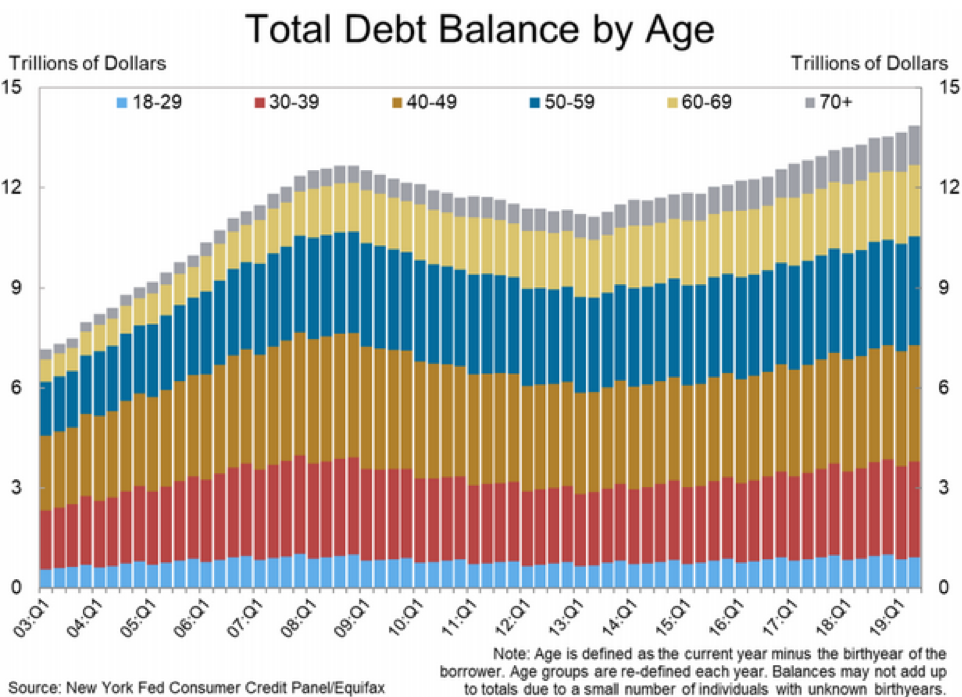
According to marketwatch.com, the current financial debt crisis among seniors is worse today than it was in the earlier 2000s. First-quarter debt in the year 2019 among seniors in their 60s was 2.17 trillion dollars according to data from the Federal Reserve Bank of New York. That is almost 1 trillion dollars more than quarterly numbers being reported in 2008 just after the start of the great recession. Senior Americans in their 70s are experiencing double the collective household debt than in the late 2000s. Second-quarter 2019 debt is 1.16 trillion dollars comparative to the .54 trillion dollars of 11 years ago. While younger Americans are also experiencing debt, those numbers are more consistent or even lower than the quarterly obligations reported during the spring of 2008.

Mortgages account for the majority of household debt across all age groups with older Americans, aged 40 and beyond, typically holding the most debt. The trend of a home equity line of credit (HELOC) is highest among those in their 50s and 60s. In essence, a HELOC functions like a second mortgage based on the current value of the home. A HELOC is not the same as a reverse mortgage which requires no repayment of the loan until the sale of the house. Surprisingly even student debt accounts for over one-fifth of household debt for Americans in their 50s. Americans’ penchant for not saving and overspending is sabotaging many a retirement.

It is tempting to want to help a family member (usually adult children) by lending or cosigning a loan for education, a car, or home. However, this action can put you in great financial peril. Let that family member learn their fiscal responsibility rather than putting yours in jeopardy. Younger people have more time to rebound from an adverse economic situation. Those Americans in their 60s and 70s who are already retired and living on fixed incomes can experience crippling life events when carrying unpayable debt.

Remember that buying on credit increases the price of what you purchase. Within the credit card industry people who pay off credit cards in full every month are known as “dead beats.” Why? The lender can’t make any money off of the loan unless your payment is less than the full balance due. The lender makes the most money when you make the minimum payment and the lender can tack on interest to the debt. This is a negative debt cycle for the borrower.

Financial advisers will caution seniors to retire with as little debt as possible. If there is a real need to obtain cash or enter into debt, do not act rashly. Fixes like a payday loan will cost you a lot of money in the long run. It is much better to work with reliable professionals and lenders and create a realistic repayment schedule that works within your budget. If a reasonable loan cannot be struck, then look for ways to avoid needing the loan at all. The best question to ask about going into debt is, “Is this a want, or is this a need?”

We can help you work through how to handle existing or future debt as part of your overall legal plan. It does not take long for debt to pile up and destroy the hopes for a successful retirement. Contact our Norman, Oklahoma office by calling (405) 241-5994 today and schedule an appointment to discuss how we can help you with your planning.

Alzheimer's Disease

Bad Financial Decisions May Be a Sign of Dementia

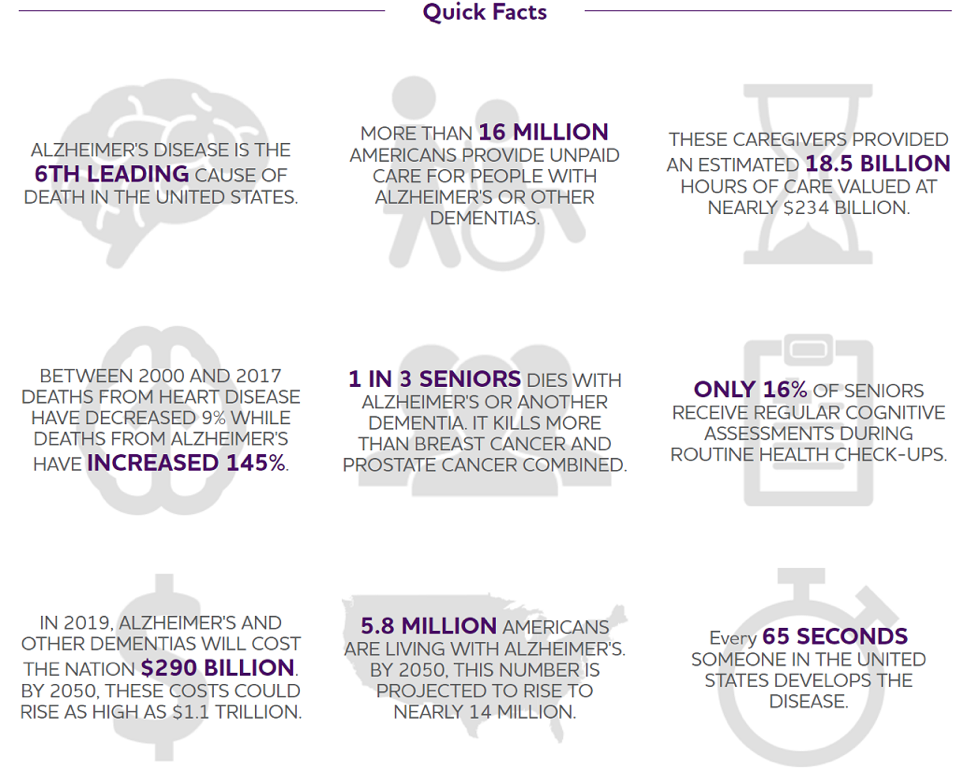
Diminishing brain function due to the onset of dementia can lead to the destruction of your financial well-being. If you are age 50 or older, easy access to your financial assets like stocks and bonds, checking and savings accounts, money market accounts, and other assets can lead to loss of these funds if an unauthorized person gains access to them, or if they are mismanaged. Family members are often unaware their loved one needs help before the unintentionally mismanaged assets, now gone, bring about devastating consequences for both the person living with dementia as well as their family. The Alzheimer’s Association reports that from diagnosis to death, Alzheimer’s disease (AD) care will cost an average of $424,000 per individual, and 70 percent of that cost is out of pocket expenses to the family system of the affected loved one.

It is common to have AD symptoms long before an official medical diagnosis. Difficulty managing money is one of the first signs of Alzheimer’s disease. To spot problems early, look for the warning signs of ill-advised financial transactions through oversight. Unopened or unpaid household bills, overspending on credit cards and making just minimum payments on the debt, falling prey to frauds and scams, and not paying attention to more significant investments that constitute the bulk of a person’s wealth are all indicators of mental decline. As a whole, the situation is very concerning as the poor financial outcomes that asset spending brings about are also happening at a time when expenditures to pay for increasing caregiving needs for dementia becomes extensive.

Projections are that by 2050, the prevalence of Alzheimer’s will triple in the US. Those individuals suffering from AD who do not have personal or family financial support will most likely become a beneficiary of the US Medicaid program. Total Medicaid spending in the fiscal year 2018 was 593 billion dollars. The federal government paid 62.5 percent, and the states paid 37.5 percent of the budget. Research statistics data from the Centers for Medicare and Medicaid Services (CMS) are projecting that, under current law, from 2018 – 2027 national health spending will be nearly 6 trillion dollars with a substantial portion of that going to underfunded seniors living with dementia.

One of the best ways to protect your finances from the unintended consequence of mismanagement due to cognitive impairment is to accept that this problem exists, and there is a need to put systems in place for financial oversight long before mental decline sets it. Meet with an elder law attorney to put the legal documents in place, allowing for power of attorney, financial control, medical power of attorney, as well as a dementia directive, as early as your 50th decade. You may also allow a trusted adult family member, friend, or financial advisor to review your monthly spending habits and bill paying.  If there is a noted error in your financial judgment or a lapse in your standard financial operating procedures, they can call it to your attention well before all of your money is gone.

Alzheimer's Disease Facts

Alzheimer’s Association

According to the Alzheimer’s Association, only 16 percent of seniors regularly receive cognitive assessments in their annual medical exams. Keep yourself from becoming vulnerable by protecting your liquid assets and your net worth with provisions for financial oversight. The safety net you put in place today can protect your finances and even be an indicator that you require testing for cognitive problems. Currently, there is no solution to the problem of Alzheimer’s disease and other forms of dementia however; there are systems you can put in place to protect yourself financially. It is best to prepare for the possibility that you may develop cognitive problems and have protections in place rather than unwittingly put yourself in financial jeopardy.

If you have any questions or need guidance in your planning for yourself or a loved one, please don’t hesitate to contact our Norman office by calling (405) 241-5994.

Ratings and Reviews

10.0Tyler R. Barrett
Tyler R. BarrettReviewsout of reviews