Aging is Better Than Ever

Aging is the sign of a successful life. After all, when you think about the alternative to aging your perspective about getting older shifts. You should start seeking self-sufficiency for your retirement years well before the age of sixty-five. But, even if you have not done so, don’t shun the planning stages. You need to address planning no matter what your age. Some preparation is better than none at all. It can provide you with some peace of mind and can take the pressure off of family members who would have to make their own income adjustments to be able to provide money to support your cost of living. No one wants to become a burden to their children or otherwise extended family. It feels good to be able to provide for oneself (and one’s spouse) no matter how lavishly or modestly. It is a relief to know that you have solid plans as well as contingency plans for the future. Although it can be hard work and tough to realize how much it will take to cover your future living expenses, putting off the planning stage does not lead to easier or better outcomes.

First of all, consider your location. Many seniors prefer the idea of living out their lives in their own home but there is much to consider about that approach. Are you close to family members or someone willing to help drive you to doctor appointments and grocery stores when you are no longer able? Can your home accommodate a wheelchair; is there a bedroom on the first floor or is there a way to get up and down the stairs? How expensive are the property taxes in your area? How mild is the weather? If you want to go to a retirement community, what locations are most affordable as well as most desirable? How would you transition to less independent living over time?

Once you know your location goals, do some worst-case planning. Adverse health and unforeseen life events can ravage your finances unless you are already managing a sizeable sum of assets or have incorporated proper planning. You might look for advice as to how to turn a nest egg into retirement income, or how to add to your long-term insurance care, or to establish some long-term insurance care. Think particularly about in-home care should your goal be to stay in your own home as you age.

You need to know if your state has approved the Long-Term Care Partnership Program, a joint federal-state policy initiative to encourage the purchase of private long-term care insurance. A professional can explain to you how it can protect some of your assets if you would require extensive care in the future, for instance for Alzheimer’s disease, which could potentially exhaust your private insurance policy benefits and require you to apply for Medicaid. A professional can also advise you if there are any federal or state tax incentives available to you for long-term care partnership insurance. You can also discuss implementing some additional life insurance that can remain in force until you are eighty. It can help a spouse with extra money should something happen to you. In the meantime, both of you could sleep better at night knowing the insurance policy is in place. The point is, you need to examine some potential worst-case expenditure scenarios and how you would be able to meet the needs of your care should the moment arise.

Your aging is a success story. Embrace how you prepare for your senior years no matter what your age is, and the sooner the better! Retirement requires careful thought, planning and decision making for the best outcome possible for you and your loved ones.

Contact our office in Norman today or call us at (405) 241-5994 and schedule an appointment to discuss how we can help you with your planning.


identity theft

Older Adults at Risk for Identity Theft

The largest coordinated sweep of identity fraud involving US seniors has recently been conducted. The US Department of Justice has reported that more than one million elderly people have collectively lost hundreds of millions of dollars because of this targeted financial abuse. The Department has criminally charged 200 out of 250 defendants identified in the sweep. These third-party scam artists account for 27% of seniors who are financially exploited.

Con artists and scammers employ many different schemes to defraud seniors of their identity information and money. A large number of them are conducted over the telephone, for instance, posing as an Internal Revenue Service agent claiming back taxes are owed or frightening a grandparent to think that their grandchild has been arrested and needs bail money wired to them. Other schemes include the promise of a prize or lottery cash if they just send a large fee in order to collect their “winnings.”.  Seniors become easy victims when targeted by these social engineering schemes and it is likely to get worse because of the proliferation of smartphones and other devices that get seniors to explore the online world.

USA Today reports that while phone scams target one senior at a time the online environment is opening doors to thousands or even millions of seniors falling prey to a single scam. Email and other online channels can reach a vast number of potential victims and more elderly people have an online presence than ever before.

Romance scams that use to be conducted in person can now be achieved in the online dating environment and even in social media. The attacker can befriend multiple seniors online and then ask for money to cover “travel expenses” to visit them. This is particularly successful as many seniors are dealing with isolation and loneliness.

The online shopping world is another vehicle employed by scam artists to defraud seniors of money. All that is needed is a picture of an object that seems to be owned by the scammer and you have the potential to sell that item over and over again to thousands of seniors. All the scam artist has to do is set up a mirror web site that appears to be a legitimate online auction house such as E-bay to drain seniors of their money as well as obtain credit card and other identity information. These mirror sites masquerading as official websites are often in the email accounts of seniors and a mere click on a link can download malicious software to their device that is designed to steal critical identity information.

Of the 27% of seniors who do become financially exploited by a third party, 67% do not exhibit symptoms of cognitive decline. That is a huge number of mentally fit seniors being financially exploited. This is a pervasive problem in the elderly community. According to the Federal Trade Commission’s “Consumer Sentinel Network Data Book 2017” identity fraud is second only to debt collection with regard to consumer complaints. Identity fraud accounted for 14% of all consumer complaints last year. The Commission also reported that seniors who are financially exploited suffer higher median losses than other age groups.

Many seniors who have been targeted are embarrassed, ashamed, or scared as a result. Many never saw themselves as being at risk, they fear retribution from the perpetrator, and they fear that government agencies or family members will label them unfit to care for themselves. Systems can be put in place to monitor senior accounts and make their money less easy to access by scammers. In addition, there are legal documents that can protect the accounts of seniors during their lifetime, and eliminate the chance of fraud or abuse.

Please contact us or give us a call at our Norman office by dialing (405) 241-5994 for more information on how we can help you or your loved ones reduce the chance of financial fraud or abuse.

mentally sharp

Staying Mentally Sharp as You Age

Age comes with wisdom. Unfortunately, it also comes with some forgetfulness. Fortunately, there are things you can do to keep the brain sharp, small daily habits which can reduce the risk of cognitive decline.

Exercise is one such daily habit. It increases blood flow, and thus oxygen to the brain; it also protects brain cells against destructive chemicals in the environment. Exercise also supports the production of new brain cells. Furthermore, research in the 2000s showed a relationship between cardiovascular risk factors and Alzheimer’s. Anything which can impair blood flow can cause strokes leading to cognitive decline, otherwise known as vascular dementia. The same activities that one would consider beneficial to the heart, such as regular exercise, can therefore also be effective in protecting the brain. And, of course, there are other benefits to exercising regularly: it helps with energy levels, decreases anxiety and depression, and can help with sleep.

Sleep is another factor in maintaining a healthy mind. But as many as half of adults 60 and older are affected by insomnia, which can result in memory loss, depression, and other symptoms. It’s important, then, to pay attention to sleep hygiene and sleep schedules to ensure sufficient duration and quality. If it takes more than 45 minutes to fall asleep, or you have trouble staying asleep, it may be worth looking into treatment.

Eating well is another way to protect the mind. It’s important to ensure you’re getting enough vitamins A, B, C, D, E, folic acid and niacin. The USDA and the HHS describe two eating plans: the USDA food patterns or the DASH Eating Plan. Foods like nuts, fish, and wine have also been linked to a healthy brain.

Art, music, reading, writing, learning, and puzzles… these are also good for keeping the brain sharp. Art has been used as an Alzheimer’s treatment and to restore memory, and arts maintain and improve dexterity and fine motor skills! Adult coloring books have become popular in recent years and can be found in many stores and online; watercolors and pastels are also relaxing.  Meanwhile, music has been linked to improved memory and cognition, and can both elevate your mood and lower blood pressure. Learning and intellectual challenges like puzzles exercise the brain and improve its capacity. Mental exercise is thought to maintain and stimulate brain cells. This includes the pursuit of a hobby, learning new skills, using brain training apps, or taking on other new kinds of projects at work.

Read more at:

If you need help navigating through a situation or want to start your planning now, you can get in touch with the Law Office of Tyler R. Barrett by clicking here to send us a message, or by calling us at (405) 241-5994.

age discrimination

Your Guide to Age Discrimination

Age discrimination in the workplace is a problem that has been addressed by lawmakers since the 1960s but continues to be a serious problem. According to study.com, age discrimination is defined as “the practice of letting a person’s age unfairly become a factor when deciding who receives a new job, promotion, or other job benefits. Decisions about terminating employees also cannot be solely based on their age.” Age discrimination is illegal and there are laws to protect people from it.

The Law

The Age Discrimination in Employment Act (ADEA) is the federal law that protects job applicants and workers over the age of 40 from age discrimination. There are a few exceptions of groups that are not included in the ADEA. These include elected officials, military personnel, and independent contractors. The law applies to employers with at least 20 employees or labor organizations with at least 25 members. It also applies to employment agencies, the federal government, and state and local governments. Along with the ADEA, all states have laws that protect workers against age discrimination and in most cases, these laws are more stringent than the federal law.

ADEA Protection

Under the ADEA, employers are prohibited from using age considerations in hiring, firing, layoffs, demotions, or promotions. In addition, there are several things employers cannot do. Employers may not mention specific age requirements or preferences when placing ads for jobs or recruiting employees. Employees may not be forced to retire at a certain age except in certain limited cases. Age limits cannot be set or specified for training programs and employers may not retaliate against employees that file age discrimination charges.

In addition, employers who provide benefits must provide those opportunities for all employees, regardless of age. However, with benefits that increase in cost with age, employers may provide the same amount of cost assistance for all employees regardless of cost or age.

Identifying Age Discrimination

Age discrimination can take many forms. Age-related comments or speaking to older employees in a demeaning manner can become harassment due to age. Harassment based on age is a tactic employer may use in an effort to get older employees to quit rather than firing them when they are deemed too old. When a company has a track record of hiring only younger people, this may be a sign of age discrimination. Getting turned down for a promotion that is then given to a younger, less qualified person or being overlooked for challenging work assignments can be signs of age discrimination. If an employer encourages or forces an employee into retirement, this is age discrimination. Oftentimes age discrimination may come in the form of being left out or isolated. Unfair disciplinary action can also be a tactic used to discriminate against older employees. If an employee suspects that he or she is being discriminated against because of age, these indicators may help in deciding if a claim needs to be filed.

Filing a Claim

Any employee has the right to file a claim if they feel they are being discriminated against because of age. If an employee wishes to pursue a claim, they must first file an administrative claim with the federal Equal Employment Opportunity Commission (EEOC). The EEOC will then contact the employer and investigate the claim. If the EEOC deems the claim to have merit, they will issue a right-to-sue notice.  Then, the employee is allowed to file suit against the employer. Claims must be filed within 90 days of the EEOC’s notice. With the various rules and requirements of this process, it is important to have competent and timely legal advice.

If you have any questions about something you have read or would like additional information, please feel free to contact the Law Office of Tyler R. Barrett by clicking here to send us a message or by dialing (405) 241-5994.

retirement

Looking at the State of Retirement Savings

It is all over the media that nearly half of Americans aged 55 and older have no retirement savings in an individual retirement account (IRA) or 401(k) according to the federal Government Accountability Office (GAO). Also, while two out of five households do have a defined benefit plan (traditional pension), a full 29 percent of older Americans have nothing saved for retirement in any of these financial retirement tools. Retirement statistics have wide-ranging implications for the economic well being of aging baby boomers. But are the numbers being interpreted accurately? Contributing Forbes Magazine writer Andrew Biggs, who works on retirement policy, public sector pay and other economic issues facing Americans, says that the claim is factually incorrect. Furthermore, he feels how the media will cover the statistics and interpreted by politicians will continue to distort the facts.

According to FactCheck.org, the statistic the GAO uses is derived from the Federals Reserve’s Survey of Consumer Finances. This survey excludes those Americans who only have a traditional pension. While that may seem a small exclusion, it significantly changes the retirement savings statistic and forward trends for aging Americans’ retirement economic health. When both traditional pensions and retirement accounts are included, a full 72 percent of households aged 55 or more have retirement savings. In 1989 the same analysis criteria indicated only 64 percent of households had retirement income set aside. Therefore there is a net gain over time of 8 percent since 1989 and about 24 percent better than when looking at current statistics that only include an IRA and 401(k) as retirement savings.

If the statistics look much better when traditional pensions are included, why does the Federal Reserve exclude projected pension income in retirement forecast data? Traditional employer-sponsored pensions have fallen off dramatically for several decades. More often, employers are likely to contribute to a personal employee retirement plan like a 401(k). This makes good business sense for private corporations that only have to match or contribute half of an employee’s contribution and avoids the long term financial planning for employee pensions; in particular indexed pensions which progressively increase in value in an attempt to address inflation and the cost of living. The private sector has been bailing out of the responsibility of individual retired workers pensions for some time and for viable economic reasons.

Meanwhile, America’s public sector job pensions are at risk of becoming too expensive for municipalities, states, and even the federal government to guarantee. Cuts in future public sector pension benefits have become common for civil servants, and the reason is the same as for the private sector, cost. Underfunded and unfunded pensions are becoming the norm, which calls into question the reliability of pension plans themselves.

Retirement security is a serious and significant national issue that typically does not get enough thoughtful analysis. Attention-grabbing headlines can distort truths, but even in its best light, many retiring Americans are at significant risk for economic hardship as people are living longer than ever before. It is widely recommended that a retirement plan make provisions for 30 years and with dementia cases on the rise many of those 30 years for a retiree may become very expensive if it includes dementia care. Many retirees plan to rely heavily on their social security benefits check. The notion that social security benefits will be the social safety net promised is also at risk. Much like pensions, the promise of full benefit payment is now at risk to individuals and many retirees are projected to receive only 77 percent of their promised social security benefit payments according to the Social Security Administration’s (SSA) own admission.

The truth about retirement savings is as individual as you are. These overall projections can be both frightening and distorted with regards to your personal retirement experience. If you are 55 or older and still working, you have the control to make different and better decisions. Any proactive planning for your future retirement is better than abdicating responsibility to private firms and public employment sectors who may have mismanaged your retirement savings.

If we can be of assistance, please don’t hesitate to get in touch with the Law Office of Tyler R. Barrett in Norman, Oklahoma by sending us a message here or by dialing us at (405) 241-5994.

How to Raise Elder Technology Adoption

You are a caregiver to your parent, but you live 4 hours away and can’t be there to help with everyday activities. Technology can help, but only if you and your parent(s) are able to understand and use it effectively.

Each year in Las Vegas the Consumer Electronics Show offers new and innovative technology products. There is no doubt that from wearable medical technology to smart homes and smart fabrics, virtual reality and robots, the wares that are on display at this trade show are dazzling. Many of these technologies bring benefits to older Americans, particularly those who are aging in place. However, technology is only as good as the user that operates it, and if a senior user has trouble integrating technology into their lifestyle, it can become a source of frustration rather than a solution to life’s challenges.

While voice activation and recognition would appear to be the solution to operational expertise for smart personal assistants, self-driving cars and more, there is anecdotal evidence that suggests when using these products elderly persons experience moderate to severe problems with their voices. These issues include things like sore throats, hoarseness, and even complete loss of voice. The aging senior may be frailer than their younger counterparts and can experience technological failure if their voice is going to be their shepherd while using voice-activated systems. Even seniors with a robust, healthy speaking voice can run into problems because of regional accents and intonations.

Continuous product refinements, upgrades and new versions of technology create a lifelong educational process for seniors. Who will educate them about new technology features? Who will provide the expertise to integrate software updates and be sure there is frictionless functioning in a senior’s smart home? The answer is most likely a younger family member who maintains their own continuous technology updates and upgrades to newer and more innovative products.

If that family member is you, there are some takeaways about dealing with an older family member with regard to technology and its use. The first is, even if they do not say it, they want and need your help. Technology can be very frustrating for seniors so you must keep a calm and relaxed demeanor as you remember to repeat key concepts. Start with small amounts of information in order to not overwhelm their learning process. Give the larger overview at first and then break the instructions into subsets over time. Always start a learning session with a review of what had been explained in your last meeting together. A small flow chart with key concepts will help reinforce their learning.

Be sure to purchase technology that is designed with the senior user in mind and slowly teach so that they have time to process what you are saying. Pausing between steps and then repeating from the beginning of a process helps to reinforce learning through repetition. Also, stop and ask your senior if they are following along well or if you are moving too quickly.

Encourage them to ask questions. Don’t just teach, let them interact and drive the product. It is essential that a senior tech user fully engages with the product they are learning. While it may be tempting to help them by finishing up a task, it is better to let your family member struggle a bit and complete the execution on their own. Hands-on learning is a better teacher than abstract instructions.

Stay patient and positive! Remember that technology can be daunting to learn for anyone, especially an older adult who may be experiencing cognitive decline.

Smart homes, wearable medical devices, Telehealth, and autonomous cars are invaluable technology breakthroughs that can make an aging American live more successfully at home. There is much to consider about what technology your family senior requires versus desires; what your senior’s needs are and their abilities to successfully manage the technologies in your absence.

Caring for a loved one while using technology can play an important role in the overall plan for aging successfully. If we can be of assistance with your planning, please don’t hesitate to reach out to the Law Office of Tyler R. Barrett in Norman, Oklahoma at (405) 241-5994.

elder law attorneys

Elder Law Attorneys Can Help the Whole Family

Many aging Americans depend on family members or friends to help manage their financial, health, and other affairs during retirement and beyond. They often believe that their family members will be able to take care of any issues that arise. While consulting with loved ones about plans and wishes can be beneficial, relying solely on them can cause problems in the long run for both seniors and their families.

Instead, it is best to seek the advice of an elder law attorney when it comes to putting proper planning in place. The issues around retirement, wills, and estate planning are often complex. Working with a legal professional can help seniors navigate these details to ensure that decisions and plans are suited to their specific situation.

Having legal arrangements in place related to retirement benefits, assets, and to determine who will be responsible for the welfare of an aging loved one can also help to avoid family disputes, and ensure that assets are preserved as intended. And although we’d like to assume family members always have seniors’ best interests at heart, legally-binding arrangements also protect against abuse and financial exploitation.

But it isn’t just seniors that benefit from working with a legal professional. Elder law attorneys can also assist heirs and beneficiaries by ensuring that assets don’t fall into wrongful hands due to debts, divorces, or other extenuating circumstances. They can also help beneficiaries avoid the long and complicated probate process.

Elder law attorney expertise

Elder law attorneys have the expertise to help seniors and their loved ones navigate all of the legal issues impacting the elderly. They can help clients to better understand Medicare and Medicaid programs and laws, and assist clients and families with all of the legal aspects of planning, including drafting wills, estate plans, and trusts.

Below is a list of some of the services elder law attorneys provide: 

  •     Medicaid Eligibility, Applications, and Planning
  •     Medicare Eligibility and Claims
  •     Social security and disability claims and appeals
  •     Long-term care planning
  •     Financial planning for long-term care
  •     Drafting wills and trusts
  •     Medical Power of Attorney
  •     Financial Power of Attorney
  •     Elder abuse case management
  •     Patient rights
  •     Nursing home issues and disputes
  •     Establishing and managing Estates and Trusts
  •     Tax advice and planning strategies
  •     Probate services
  •     Asset protection… and more

Seniors tend to procrastinate planning due to the unpleasant associations of illness and death. Elder law attorneys can alleviate that discomfort by facilitating family conversations and shifting the focus to the positive benefits of planning and preparedness. Cost can also deter seniors from seeking legal advice and services, however, failing to plan can ultimately end up being far more expensive.

No matter the issue at hand, seniors and their loved ones will benefit from working with a legal professional. If you’d like to learn more about how elder law services can help you or an aging loved one, contact the Law Office of Tyler R. Barrett in Norman, Oklahoma today by clicking here to send us a message or by giving us a call at (405) 241-5994.

Does At-Home Care Reduce Hospitalizations?

The US Department of Health and Human Services (HHS) projects the number of Americans in need of long-term care (LTC) by 2020 to be roughly 12 million with nearly half those seniors exhibiting some form of dementia. According to Forbes.com, about half of all long-term care insurance claims are from policyholders living with dementia. The federally run program Medicaid is the primary financing mechanism of LTC where most of the monies are spent on institutional care settings that are ill-equipped to handle an increasingly large and longer living elderly population. Federal initiatives have been incentivizing States to utilize Medicaid home and community-based services (HCBS) waiver programs to address the growing long-term care needs of aging Americans. This shift to home and community-based services is often seen as having an obvious benefit. HCBS is seen as an easy fix to offset the increasing demands for long-term care. Evaluation of health outcomes, social equality, and the costs of both settings is necessary to create the most beneficial and efficient systems to care for the aging.

Compounding the complexity in evaluating HCBS versus institutional long-term care is the statistical breakdown of racial and minority ethnic groups, as well as people living with dementia. Racial and minority ethnic groups and dementia sufferers as a whole use these Medicaid services more than non-minority groups.  Regardless of the group, people living with dementia tend to need the highest-intensity care. While hospitalization rates for HCBS and nursing facility residents remain similar, nursing facility residents were, in general, older and sicker than their HCBS counterparts.

If at-home and community-based care does not lessen rates of hospitalizations and may create potential implications for inequality in access to high-quality nursing care facilities, policymakers may need to reconsider the full costs and benefits of shifting care. In nursing facilities, even elderly, dual-eligible Medicaid beneficiaries who tend to be older and have more chronic health conditions are not more likely to require hospitalization than those in-home and community-based care. Therefore, since sicker nursing facility residents with more serious health issues and their home care counterparts have similar hospitalization rates, it would seem that HCBS is not lowering the rates of hospitalizations.

McKnight’s.com reports a group of researchers at the University of Chicago are citing why hospitalization rates do not decline under home and community-based care. The majority of home care residents receive help at the hands of untrained caregivers in non-facility settings. Even with appropriate tools available untrained caregiving leads to more undesirable health outcomes. Unsurprisingly, patients living with dementia, who generally require the most intense care, had higher hospitalization rates due in part to living in an unsecured facility and the inability for a caregiver to provide non-stop oversight which is a hallmark need of a person living with dementia.

Medicaid long-term care expenditure is reflecting this shift to home and community-based care, with nearly 60 percent of spending for HCBS. Because hospitalization rates do not substantially decline and inequitable health care for minorities increases while the majority of the budget is expended in the HCBS program it is time to rethink the quality of care and health outcomes and efficiencies of the program. Skilled nursing providers in a facility setting provide better care for all regardless of level and type of sickness, and racial and ethnic groups.

Education and expertise in industries, whether medical, legal or health care occurs because each field requires a unique skill set to drive optimal outcomes. Understanding how long-term care needs affect an individual’s retirement plan under Medicaid or dual-eligible status Medicare/Medicaid, is pertinent for both positive health outcomes and financial well-being.

Please don’t hesitate to contact us to discuss your needs and how to plan for long term care. You can send the Law Office of Tyler R. Barrett a message at their Norman, Oklahoma office by clicking here or give them a call at (405) 241-5994.

hearing loss

Going Deaf May Cause Depression

The findings from a ten-year study by the Journal of the America Medical Association (JAMA) reports of a link between hearing loss and health risks. The risks include a 50 percent greater risk of dementia, a 40 percent greater risk of developing depression and nearly a 30 percent higher risk for unintended falls.

Reuters Health cites data analyzed by researchers, combining the findings from 35 previous hearing studies with participants aged 60 or more, which establishes the connection between hearing loss and depression. The aggregate of the conclusions of these reports suggests that older adults who experience some form of hearing loss are 47 percent more likely to display symptoms of depression. The take away is that depression is often brought about by the isolation of an individual and hearing loss tends to create social isolation. Dr. Nicholas Reed of the Cochlear Center for Hearing and Public Health at Johns Hopkins University School of Medicine agrees with the findings published by Reuters. “First, hearing loss impairs communication and influences balance, which can lead to social isolation and decreased physical activity that, in turn, result in depression,” Reed said.

Beyond the problem of social isolation due to hearing loss is that the longer you wait to address the issue the greater the risk of associated cognition problems. An older adult may be able to hear words but not be able to understand their meaning cognitively. It is imperative to see an audiologist and test hearing capabilities to establish an informational baseline and make future adjustments accordingly. Overall, older adults who experience hearing loss tend to withdraw from society and are more likely to experience mild cognitive decline furthering levels of social and emotional loneliness.

It is estimated that 100 million people in the US are exposed to unhealthy levels of noise. Aircraft and automobile noise, leaf blowers and lawnmowers, car stereos and earbuds all contribute to the increase of hearing loss. Hearing loss lowers quality of life and can also have severe implications regarding personal safety. Potential danger warnings like smoke alarms, car horns, fire alarms, public safety announcements all require the ability to hear. Hearing loss limits everyday life experiences in our ability to socialize, work, and communicate. It also limits joyful experience like the sound of a child laughing, a bird singing, a loved song on the radio, or a gab session with a great friend.

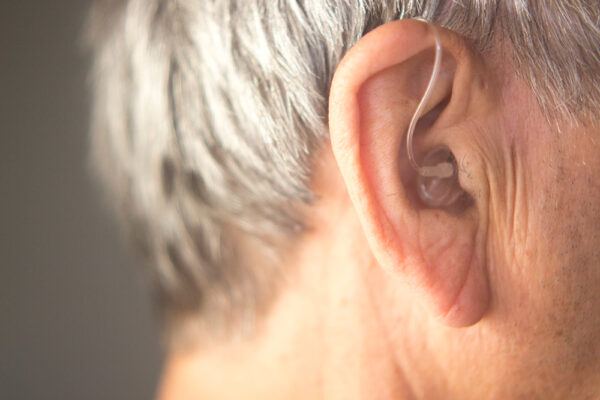
Thus far there is no way to undo damaged hearing but other than cost; there is no downside to hearing aids anymore. Their look is discreet, they are easy to learn how to use, and professionally adjustable over time to compensate for increased hearing loss. Once you factor in the cost of a potential fall, increased risk of dementia, social isolation, and depression, the price of hearing aid(s) winds up being comparatively minimal. Although the study, as reported by Reuters, does not investigate whether treating hearing loss can prevent depression aging Americans should still seek medical attention when experiencing hearing problems.

Hearing is a complex biological phenomenon. First ears capture sound traveling through the air as a vibration in air pressure. The outer ear (pinna) catches the sound waves and indicates its direction, in front, behind, above or below you. The ear canal receives the sound wave and triggers vibrations to the eardrum which becomes amplified by tiny bones known as ossicles. Then the amplified vibrations travel to the cochlea in the inner ear where the sound is translated into nerve impulses that your brain recognizes and processes as distinct sounds.

Hearing and its complexities and loss will continue to get a lot of attention moving forward. In a world full of headphones, earbuds, robust speakers, and unwanted environmental noise, all of us are at risk of having diminished hearing abilities. Turn down the sound whenever possible to improve your quality of life as you age. Hearing loss has a profound impact on your well being.

Be proactive in the monitoring of your hearing abilities and subsequent hearing loss as you age.  If we can be of assistance in any way, please don’t hesitate to reach out.

You can reach The Law Office of Tyler R. Barrett in Norman, Oklahoma by clicking here to send us a message or by calling us by dialing (405) 241-5994.

medicaid gift giving

The Problem with Gift-Giving on Medicaid

Mabel’s children were concerned that Mabel would need long-term nursing-home care in the near future. It was the holidays, and Mabel always got a lot of joy out of generosity. But her children had heard that people in Mabel’s circumstances should not give gifts.

The concern is real. For Medicaid to cover the huge expense of nursing-home care, Mabel would have to show that she owned nothing more than around $2,000. And she must also show that she had not given away money or assets over the prior five years (2.5 years in California). That Medicaid rule – the “look-back period” or the “transfer penalty” – would charge Mabel dearly for her generosity. Depending on the size and number of gifts, the penalty could be substantial.

Many wrongly think that there is no penalty for gifts of up to around $15,000 annually. That misunderstanding confuses tax law with Medicaid law (and it also misstates tax law, but that’s another subject). The Medicaid rules are entirely different from the tax rules. In the Medicaid context, gifts of any amount that are given during the look-back period can be penalized.

There are exceptions. These include gifts to spouses and siblings under certain circumstances, disabled children, and children who are caregivers and who live at home with the elder for a span of time. But overall, gifts and Medicaid do not go together. The Medicaid rules are complicated and the consequences for mistakes can be very costly. There are a number of options to protect assets and still qualify for benefits, but these options must be weighed with great care. This is why it’s best to consult attorneys who, like us, are qualified by experience and expertise in Medicaid law.

There is one harmless deception Mabel’s children might consider, to keep Mabel happy and still satisfy the Medicaid rules. The children might help Mabel fill out checks for all the gifts she’d like to give, together with a greeting card for each gift. Everybody could thank Mabel, tear up the check later, and tell her what they “bought” with that amount. It may be that that little device would be worth it, so Mabel could enjoy the holidays too.

Otherwise, the sooner you consult a qualified elder law attorney, the more other options may be available. If we can be of assistance, please don’t hesitate to reach out.

You can reach The Law Office of Tyler R. Barrett, PLLC in Norman, Oklahoma by dialing us at (405) 241-5994 or by clicking here to send us a message.

Ratings and Reviews

10.0Tyler R. Barrett
Tyler R. BarrettReviewsout of reviews